Understanding EMSA Preventive Health and Safety Training
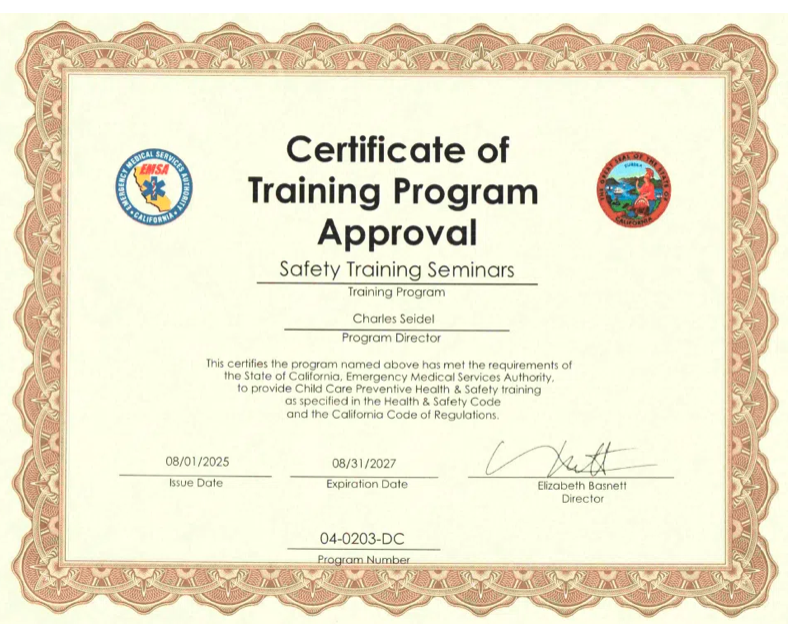
EMSA is the California Emergency Medical Services Authority, the state agency that approves health and safety training programs for childcare providers. California’s childcare health and safety training is generally divided into two courses. Pediatric CPR and First Aid prepares caregivers to respond when something goes wrong. Preventive Health and Safety training focuses on keeping problems from happening in the first place.
Safety Training Seminars runs its Preventive Health and Safety Course as an 8-hour program. It covers infectious disease prevention, childhood injury prevention, caring for children with special needs, child abuse reporting, nutrition, and Lead Poisoning Prevention. Rather than memorizing rules, participants learn how to apply each topic to the routines of a real childcare day.
Where the Course Fits in California Childcare Licensing
Licensed childcare in California is overseen by Community Care Licensing, a division of the California Department of Social Services. Community Care Licensing sets health and safety training standards for both Child Care Centers and Family Child Care Homes.
Requirements are not the same for everyone. A licensee opening a Family Child Care Home, a center director, and a newly hired teacher’s aide may each face different expectations. Facility type, job role, licensing status, employer policy, and current regulations all play a part. Before enrolling, it is wise to confirm exactly what your situation calls for with your Community Care Licensing regional office or your employer. This page offers general guidance, not legal or regulatory advice.
Why Lead Poisoning Prevention Matters for Young Children
Children under six are especially vulnerable to lead. They crawl on floors, explore with their mouths, and absorb lead more readily than adults while their brains and bodies are still developing. Even low levels of exposure can affect learning, attention, and behavior.
What makes lead particularly concerning is that it often goes unnoticed. Alameda County’s Healthy Homes Department, which runs the county’s Lead Poisoning Prevention Program, notes that many children with lead poisoning look and act perfectly healthy. A blood test is the only reliable way to know.
For childcare providers, prevention comes down to awareness and habit. The course helps caregivers recognize common sources such as chipped or peeling paint in older buildings, contaminated soil in outdoor play areas, and certain imported toys, cosmetics, or dishware. It also reinforces simple daily practices, including frequent handwashing, wet-wiping dusty surfaces, and checking play spaces regularly. Just as importantly, providers learn how to talk with families about lead and encourage them to ask their pediatrician about testing.
Feeding Children Well in a Childcare Setting
Few parts of the childcare day involve as many health decisions as mealtime. A single snack table might include a child with a peanut allergy, another following a religious diet, and a toddler who refuses almost everything. The nutrition portion of Preventive Health and Safety training prepares providers to handle that mix with confidence.
Food allergies receive close attention because mistakes can be serious. Providers learn to read labels carefully, prevent cross-contact during food preparation, and follow each child’s care plan exactly. The training also addresses specialized diets, whether cultural, religious, or medically prescribed, and how to keep those meals balanced and age-appropriate.
Some children need extra consideration. A child managing diabetes, for example, may depend on consistent meal and snack timing, which means close coordination with parents. Caregivers also learn to notice feeding difficulties or growth concerns that are worth sharing with families. Dental health is part of the picture too: limiting sugary drinks and never putting an infant down for sleep with a bottle are small habits that protect young teeth. The goal is not to turn providers into nutritionists. It is to help them spot concerns early and respond in partnership with families.
Sanitation Habits That Keep Illness From Spreading
Colds, stomach bugs, and other infections move quickly through groups of small children. Consistent sanitation is one of the most effective tools a caregiver has.
The course covers safe food handling and kitchen cleanliness, proper diapering procedures, toilet and handwashing area hygiene, and regular cleaning of toys and shared surfaces. It also touches on indoor air quality and ventilation. For Family Child Care Home providers, these routines take place in their own homes, so building clear, repeatable habits for childcare spaces is especially valuable.
Livermore’s Early Childhood Education Community
Livermore has a strong early learning community, and much of it is rooted locally. Las Positas College, on the city’s north side, offers an Early Childhood Development program that prepares future teachers to work with children from birth to age five. Its curriculum includes maintaining health, nutrition, and safety standards in early childhood settings, and its on-campus Child Development Center serves as a lab school where students gain hands-on classroom experience.
Families searching for care often connect with Hively, a Pleasanton-based nonprofit that provides childcare referrals for Livermore, Dublin, Pleasanton, and Sunol. That network of home-based providers, preschools, and centers is the same community that regularly needs EMSA childcare training.
People who commonly take the Preventive Health and Safety Course in Livermore include Family Child Care Home licensees, center directors and teachers, early childhood education students preparing to enter the field, preschool aides, and after-school program staff. Students and new hires should check with their school or employer about which certification they recognize before enrolling.
Serving Providers Across the Tri-Valley
Livermore sits at the eastern edge of the Tri-Valley in Alameda County, along the I-580 corridor, which makes the Independence Drive location practical for more than just Livermore residents. Childcare professionals from Pleasanton, Dublin, Sunol, and San Ramon may find it a convenient choice. So may providers from Tracy and Mountain House, just over the Altamont Pass in San Joaquin County.
The area’s healthcare environment centers on Stanford Health Care Tri-Valley, formerly known as ValleyCare, which has served Livermore, Pleasanton, and Dublin since 1961. Strong local healthcare is a good reminder that childcare providers are often the first to notice when a child seems unwell, and preventive training helps them know when to involve families and medical professionals.
Training With Safety Training Seminars in Livermore
Safety Training Seminars is a member of the Livermore Valley Chamber of Commerce and offers courses in cities across Northern California. At the Livermore center, childcare providers can take the EMSA Preventive Health and Safety Course and the EMSA Pediatric CPR and First Aid course, which is helpful for anyone who needs both parts of their childcare health and safety training. The company also offers an online Zoom option for the Preventive Health course.
Earn Your EMSA Childcare Health & Safety Certification in Livermore
The habits taught in Preventive Health and Safety training rarely look dramatic, but children benefit from them every day. A provider who reads every snack label prevents an allergic reaction before it starts. Washing hands consistently and disinfecting the diaper station stops a stomach bug from spreading through the room. Noticing peeling paint near the play yard keeps lead out of a toddler’s hands. Over time, these routines become second nature, and families can feel that difference in the care their children receive.
For childcare professionals in Livermore and across the Tri-Valley, completing this training is a practical step toward licensing, a new role, or simply greater confidence in the classroom or home program. Start by confirming your specific requirements with Community Care Licensing or your employer so you know which courses your role calls for. If you also need Pediatric CPR and First Aid, consider scheduling both together to finish your health and safety training sooner.