Nestled in the easternmost portion of Alameda County, Livermore balances a rich agricultural heritage with a thriving scientific, wine-growing, and light-industrial community. From research facilities near the Lab and commercial spaces along Interstate 580 to downtown tasting rooms, local schools, and sprawling residential neighborhoods, daily life here spans many environments. When unexpected medical incidents happen in these diverse settings, having individuals nearby who know how to respond appropriately makes a distinct difference.
For local manufacturing employees, hospitality staff, youth sports coaches, and administrative workers seeking to build practical emergency response competencies, registering for American Red Cross CPR and First Aid certification classes in Livermore provides a reliable pathway. These courses supply clear instruction on managing sudden cardiac events, physical trauma, and everyday injuries. Reviewing available options helps learners meet organizational mandates while gaining the confidence to assist co-workers, family members, or neighbors.
Quick Answer / Key Takeaway
Individuals looking for training across the Tri-Valley area can find structured CPR and First Aid classes in Livermore tailored to meet employment standards, school prerequisites, or personal safety goals. Curricula span simple adult rescue techniques to multi-hazard certifications incorporating automated external defibrillators.
What Are American Red Cross CPR and First Aid Classes?
Emergency response training breaks down into focused educational components that teach learners how to handle distinct types of medical crises. While frequently grouped together, each discipline covers specific procedures.
- CPR Training: Concentrates on restoring artificial circulation through chest compressions and rescue breaths when a victim suffers sudden cardiac arrest.
- First Aid Training: Instructs participants on recognizing and managing non-cardiac medical incidents, ranging from soft tissue injuries to environmental exposures.
- AED Integration: Automated external defibrillators evaluate heart rhythms and deliver corrective shocks if needed. Training demonstrates how to operate these units alongside standard compressions safely.
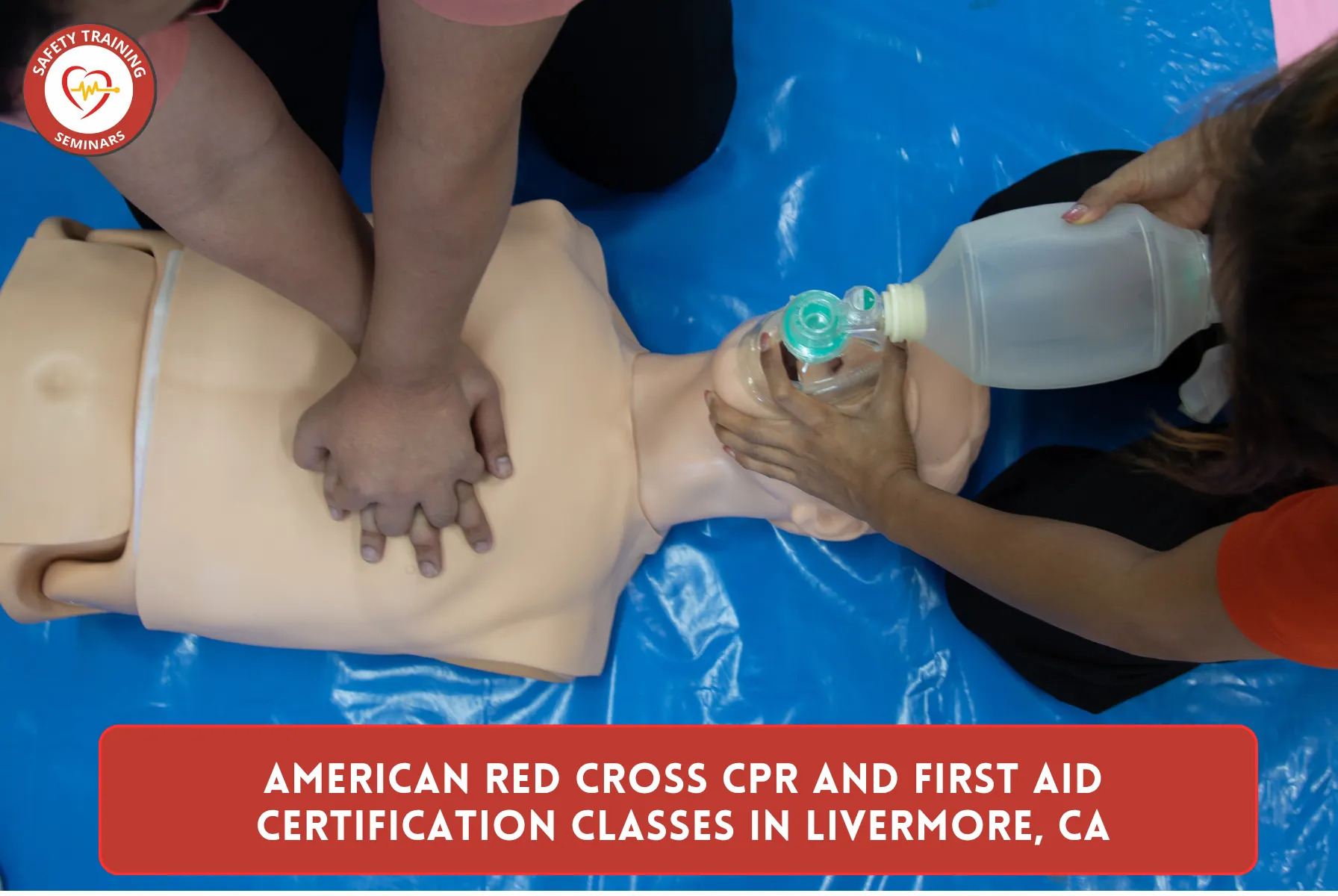
Grasping these fundamentals highlights why physical practice matters. Working directly with training manikins builds tactile familiarity and correct technique. Learners should always confirm exact mandates with their employer, school registrar, or licensing board prior to enrollment.
CPR Training in Livermore
Cardiac emergencies can occur anywhere, from a quiet residential street in the Springtown neighborhood to a bustling commercial workspace near North Livermore Avenue. Proper instruction prepares everyday people and designated workplace responders to act without hesitation. Depending on the specific program chosen, instruction covers:
- Adult, Child, and Infant Support: Modifying compression depth and hand placement based on the age of the patient.
- Obruction Relief: Clearing blocked airways for responsive and unresponsive individuals.
- Coordinated Response: Managing multi-rescuer scenarios common in industrial and professional environments.
For many local businesses, fulfilling OSHA safety standards or corporate policies requires verifiable hands-on training. Selecting the right curriculum ensures participants gain skills directly applicable to their daily surroundings.
First Aid and AED Training in Livermore
While cardiopulmonary resuscitation focuses on breathing and circulation, First Aid education addresses a wide array of physical injuries and sudden illnesses. In active regional settings—such as local hiking trails near Sycamore Grove, community recreation centers, vineyards, and bustling retail corridors—knowing how to manage trauma is exceptionally practical.
First Aid courses commonly teach participants how to address:
- Severe bleeding control and wound management
- Joint sprains, muscular strains, and suspected bone fractures
- Environmental issues such as dehydration or heat-related illness
- Sudden medical events including allergic reactions, minor burns, and diabetic episodes
Integrating AED proficiency rounds out this education, equipping staff members to handle combined medical emergencies safely before emergency medical personnel arrive.
Who Typically Takes These Classes?
Emergency response education draws participants from numerous sectors throughout the community. Different occupations and lifestyle responsibilities call for varied levels of preparedness:
- Industrial and Logistics Personnel: Employees working in distribution, warehousing, and light manufacturing facilities frequently complete training to satisfy workplace safety protocols.
- Hospitality and Service Workers: Winery staff, restaurant employees, and hotel personnel maintain certification to handle guest medical incidents safely.
- Coaches and Fitness Leaders: Athletic trainers and fitness center staff keep their skills current to manage sports-related injuries or sudden cardiac events.
- Parents and Family Caregivers: Residents managing households with young children or aging relatives take courses to prepare for domestic emergencies.
- Students: High school and college students pursuing vocational, nursing, or educational programs often need documented certification before starting clinical hours or fieldwork.
How to Choose the Right Course
Determining which program to take depends entirely on your job description and personal objectives. Reviewing standard course options helps clarify what each session delivers:
| Training Type | Typical Focus | Common Applications |
| CPR | Chest compressions and cardiac arrest response | General workplace safety, personal preparedness |
| First Aid | Managing physical injuries and sudden illnesses | Community volunteers, hospitality staff, general workplaces |
| CPR/AED | Combined chest compressions and defibrillator use | Fitness clubs, corporate offices, public facilities |
| First Aid/CPR/AED | Comprehensive multi-topic emergency education | Industrial workers, coaches, designated safety monitors |
Because prerequisites vary widely by sector, always verify your exact required training category with your human resources department, safety coordinator, or school administrator before booking a seat.
Local Livermore Training Considerations
Livermore sits at the eastern anchor of the San Francisco Bay Area’s Tri-Valley region, bordered by Pleasanton and Dublin while serving as a gateway to the Central Valley via Highway 580. With a mix of technology research centers, light industrial parks, local agricultural tourism, and expanding residential developments, the local workforce spans diverse industries.
Employers across the area maintain strict safety standards, making accessible local CPR training options essential for workers seeking compliance without excessive travel. Whether commuting from downtown historic districts or residential zones near the Granada area, having nearby access to structured local emergency-response training allows professionals to complete certification requirements efficiently and return to their duties.
Safety Training Seminars in Livermore
For students and workers seeking in-person instruction nearby, Safety Training Seminars maintains a dedicated training facility directly within the community.
- Address: 3195 Independence Drive, Suite 1, Livermore, CA 94551
Attending classes locally gives learners direct access to qualified instructors, training manikins, and functional AED units. Reviewing course calendars beforehand helps participants find a session time that accommodates their work schedule and certification deadlines.
Why Choose Safety Training Seminars for CPR and First Aid Training in Livermore, CA
Selecting a dependable local provider ensures your certification process remains organized and stress-free. Safety Training Seminars delivers straightforward programs built for practical learning. Notable aspects of their local training include:
- Convenient Local Facility: Situated accessibly in Livermore with straightforward parking arrangements.
- Clear Class Structures: Straightforward course outlines that detail what material will be covered.
- Engaging Instruction: Interactive classroom environments that encourage questions and practical skill practice.
- Straightforward Registration: Simple online booking systems designed for individual students and corporate groups alike.
Frequently Asked Questions
What types of CPR classes are available in Livermore?
Options range from standard adult rescue courses to comprehensive programs covering infant care, AED operation, and First Aid. The right choice depends on your specific occupation or personal goals.
Does First Aid training include CPR?
Not automatically. Standard First Aid covers injury and illness management, whereas CPR focuses on restoring circulation. Many learners opt for a combined First Aid/CPR/AED course to cover all bases in one session.
Do local employers accept American Red Cross certification?
Most organizations accept American Red Cross credentials, but internal compliance policies vary. Always check with your human resources department or supervisor to confirm their specific documentation rules before registering.
Is hands-on practice included in these sessions?
Yes. In-person classes incorporate physical skill practice, allowing participants to perform compressions and bandaging techniques under direct instructor supervision.
What should I check before registering for a class?
Always verify your organization’s exact requirements regarding course type, renewal intervals, and whether an in-person skills session is mandatory for your role.
Conclusion
Acquiring proper emergency response credentials is a practical way to prepare for unexpected medical situations. By understanding the distinction between CPR and First Aid, evaluating your individual professional obligations, and utilizing accessible local resources, you can select the ideal course with confidence.
Workers, educators, and residents throughout the region can explore current schedules through Safety Training Seminars to locate a convenient class at their Livermore facility. Be sure to verify your employer or school compliance rules prior to registering to guarantee your chosen class fulfills all necessary standards.