Livermore Valley is known for its sprawling vineyards, historic downtown, and vibrant community events. Whether you are pouring vintages at a local winery, teaching at a local school, or treating patients in a clinical setting, knowing how to handle a medical crisis is a fundamental responsibility. Obtaining a BLS CPR Certification Course or general First Aid credentials ensures you can respond effectively when seconds matter.
Finding the right training program requires matching your specific career, regulatory, or personal requirements with an official, hands-on learning environment. This guide breaks down the different types of certification, state and workplace compliance standards, and how to select a local class in the Tri-Valley area that meets your schedule and professional needs.
Key Takeaway: Course selection depends on your job role. Healthcare providers generally require Basic Life Support (BLS), while workplace responders, educators, and hospitality staff typically need lay-responder CPR and First Aid. Always verify whether your employer or licensing board specifies American Heart Association (AHA) credentials before enrolling.
Understanding the Differences in CPR and Emergency Training
Not all emergency response courses teach the same curriculum. Enrolling in the wrong class can cost time and money if your employer or licensing board rejects the credential.
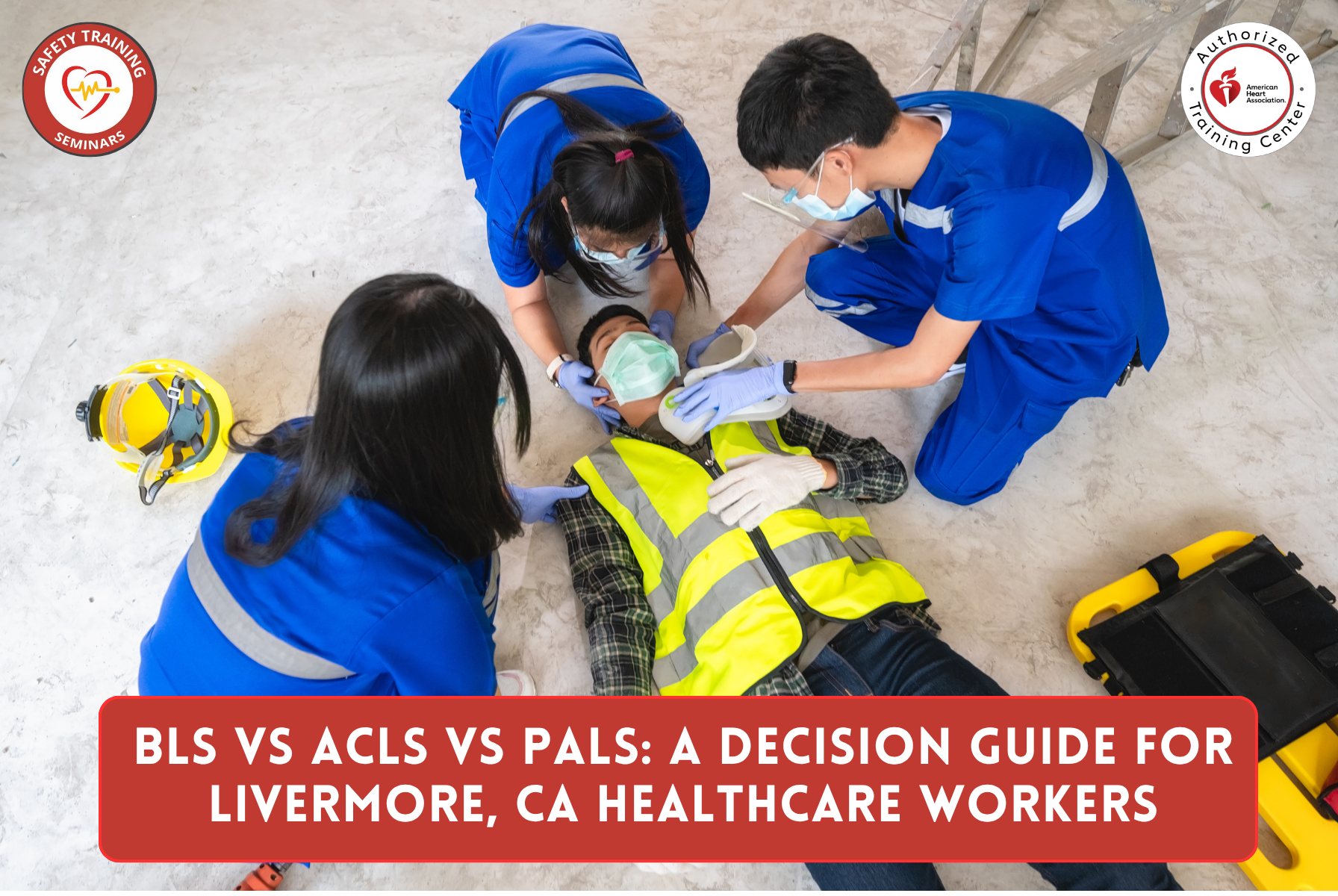
- Basic Life Support (BLS): Designed specifically for healthcare professionals, medical students, nurses, paramedics, and dental staff. It focuses on high-quality CPR for adults, children, and infants, multi-rescuer team dynamics, bag-valve-mask (BVM) ventilation, and Automated External Defibrillator (AED) use.
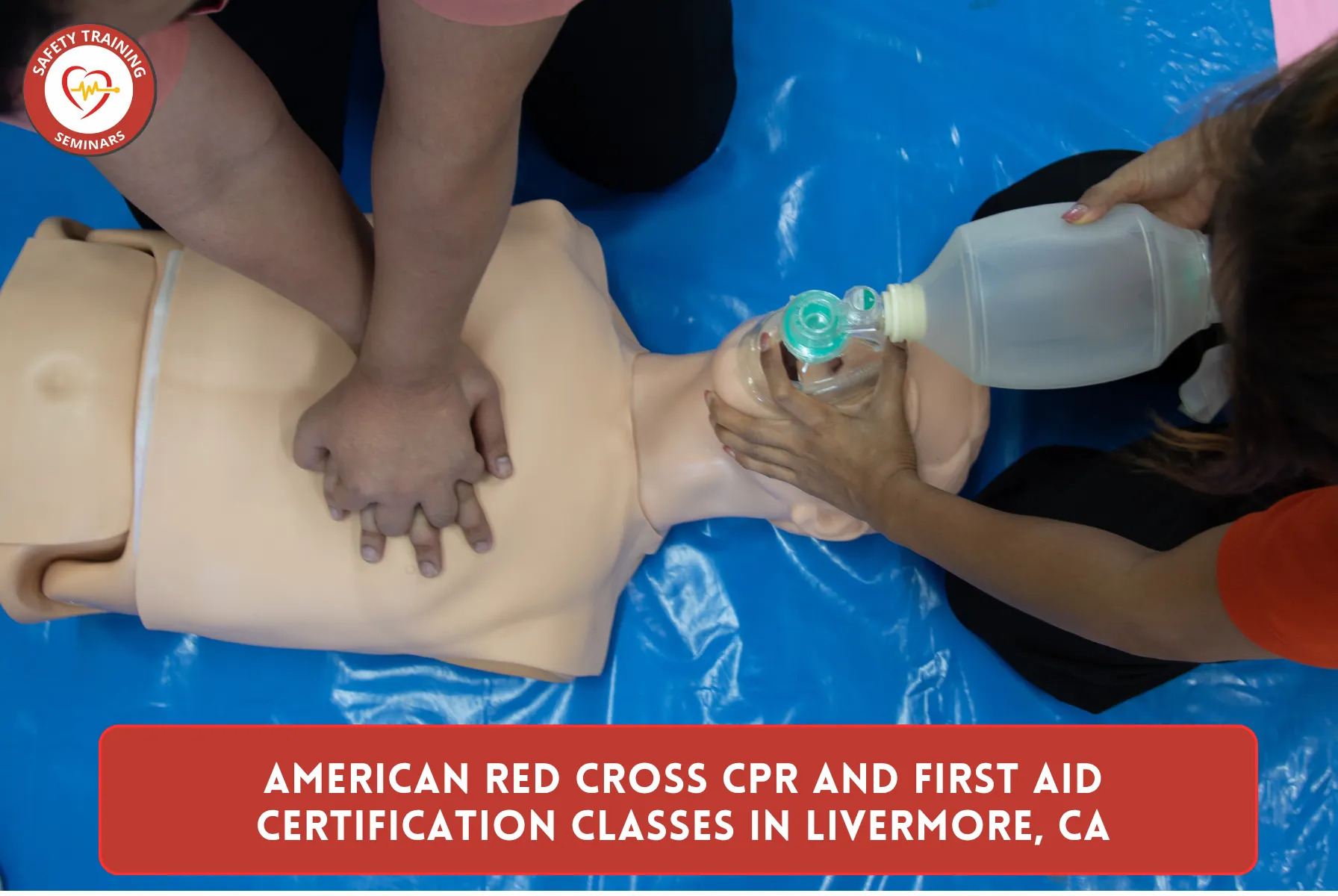
- Heartsaver CPR & AED: Geared toward non-healthcare personnel, including office workers, construction teams, fitness trainers, and winery staff. It covers basic chest compressions, rescue breathing, and AED operation.
- First Aid Training: Focuses on treating non-life-threatening injuries and sudden medical illnesses, such as severe bleeding, burns, allergic reactions, fractures, and heat exhaustion.
- Pediatric CPR & First Aid: Essential for childcare providers, preschool teachers, and babysitters. This track covers pediatric-specific emergency responses and often meets specific state licensing criteria.
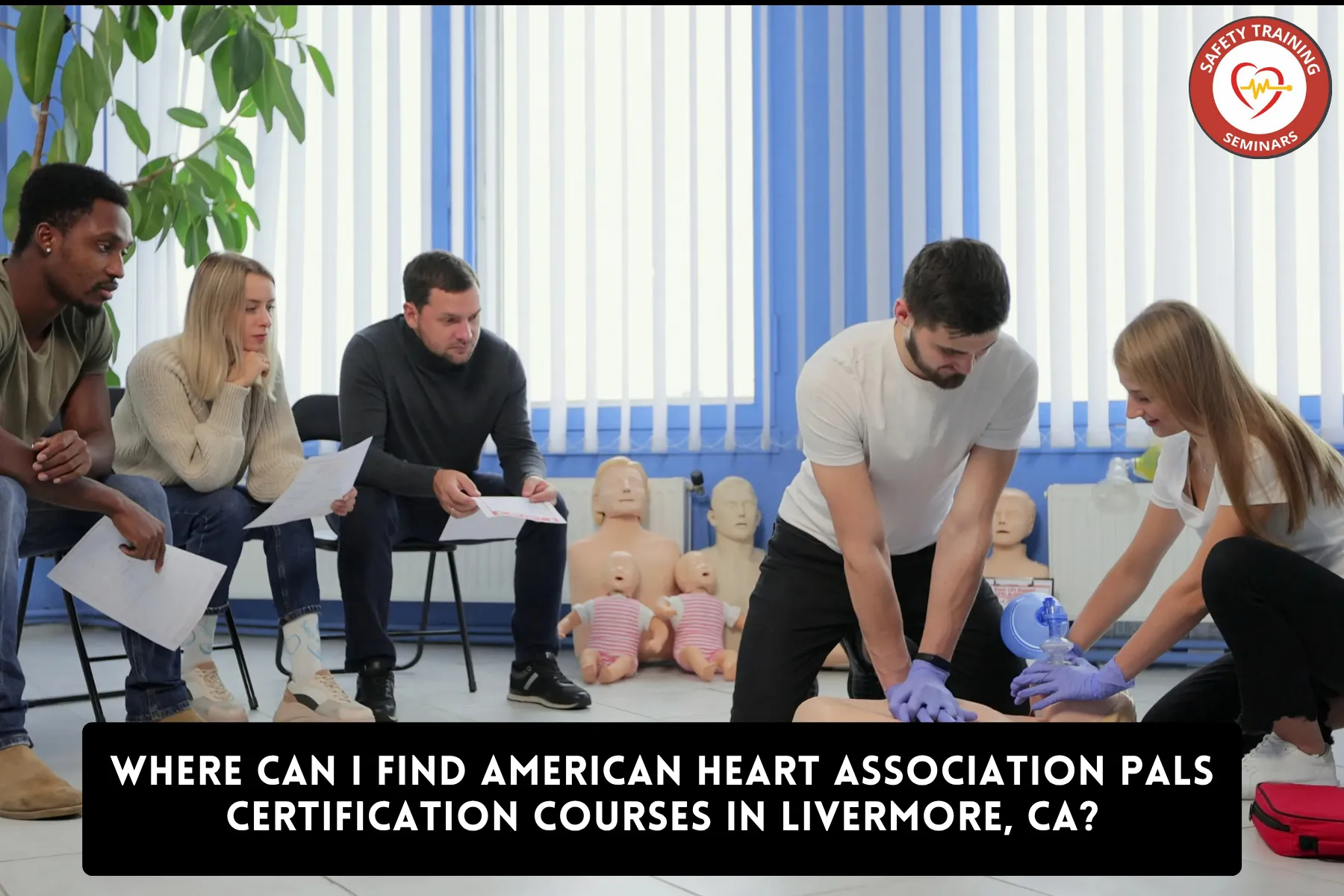
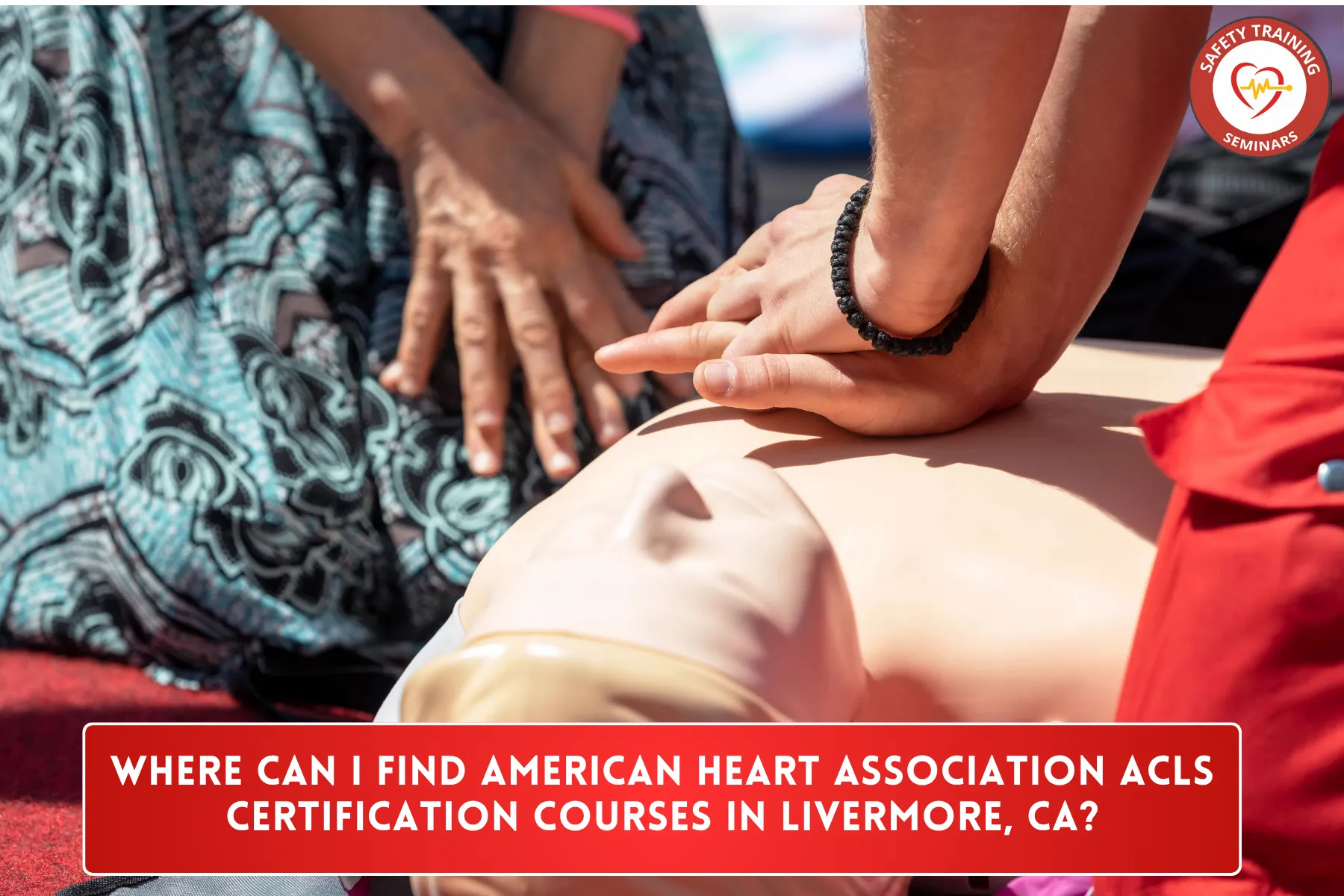
- Advanced Cardiovascular Life Support (ACLS) & Pediatric Advanced Life Support (PALS): Advanced certifications intended for emergency room staff, intensive care clinicians, and medical personnel who manage complex cardiovascular or pediatric emergencies.
Workplace Requirements in Livermore and California Guidelines
Employment sectors across Alameda County operate under distinct safety guidelines. Knowing which agency oversees your field helps narrow down the correct course option.
Healthcare and Clinical Settings
Hospitals, outpatient surgical centers, and home health agencies strictly require BLS credentials. Most medical boards and clinical programs demand courses patterned after American Heart Association guidelines, incorporating a physical skill evaluation using real-time feedback equipment.
Childcare and Education
California law mandates that licensed childcare centers and family child care homes maintain staff certified in pediatric CPR and First Aid. Programs must adhere to standards monitored by local regulatory bodies and the California Emergency Medical Services Authority (EMSA).
General Industry and Hospitality
With dozens of family-owned wineries, tasting rooms, and event centers operating throughout the Livermore Valley, hospitality and agricultural workers regularly interact with large crowds. Cal/OSHA regulations require employers to ensure adequately trained personnel are available to render first aid if medical facilities are not in close proximity.
Blended Online vs. Fully In-Person Classes
When searching for a class, you will encounter fully in-person sessions, blended learning options, and purely online courses.
Purely online certificates without an in-person skills evaluation rarely satisfy healthcare licensing boards or Cal/OSHA standards. Blended learning—completing coursework online followed by a short, structured in-person skill check—provides the same accepted credential while offering scheduling flexibility.
How to Prepare for Your Skill Evaluation
To ensure a smooth certification experience, prepare ahead of your scheduled session:
- Review Key Terminology: Revisit adult and pediatric chest compression rates (100 to 120 compressions per minute) and standard depth guidelines (at least 2 inches for adults).
- Wear Comfortable Clothing: Skills testing involves kneeling on the floor beside training mannequins, performing chest compressions, and managing airway equipment.
- Bring Required Materials: If you completed an online lecture component, bring your completion certificate to the practical skills session.
Training Options with Safety Training Seminars
For students and professionals seeking structured instruction near home or work, Safety Training Seminars offers regular certification options across Northern California.
The Safety Training Seminars Livermore CPR Training Center Address is 3195 Independence Drive, Suite 1, Livermore, CA 94551. This location serves residents throughout the East Bay and Tri-Valley region, providing convenient access for those working in the city center or nearby agricultural and industrial zones.
Having a dedicated local center allows healthcare personnel and workplace groups to complete initial credentials or renewals without traveling far. Safety Training Seminars maintains additional facilities throughout the region, offering options like American Heart Association BLS classes in Dublin, CA for clinicians living or working closer to the I-580/I-680 interchange.
If you are located closer to the Bay area corridor, you can explore local CPR and First Aid certification courses in Alameda, CA or schedule ACLS certification training in Berkeley, CA. Medical providers based further north can also access nearby PALS classes for healthcare professionals in Albany, CA.
What to Look for in a Local Training Provider
Before registering for a course in the Livermore area, confirm these standard criteria:
- Official Curriculum: Verify that the certification issued is recognized by national bodies like the American Heart Association or American Red Cross.
- Hands-On Skills Verification: Ensure the class provides physical practice with feedback mannequins and AED trainers.
- Same-Day Certification: Confirm whether digital certification cards are issued promptly upon successful completion of the course and skill evaluation.
- Flexible Scheduling: Look for providers offering morning, evening, or weekend options, as well as blended learning skill checks to fit around work shifts.
Frequently Asked Questions
What CPR course do I need if I work in a hospital or clinic?
Healthcare workers, including nurses, doctors, dentists, and EMTs, typically need a Basic Life Support (BLS) course. General CPR/First Aid courses intended for lay responders do not meet medical credentialing standards.
How long does a CPR certification remain valid?
Most national resuscitation credentials, including BLS, Heartsaver, ACLS, and PALS, are valid for two years from the end of the month in which the course was completed. Re-certification is required prior to expiration to maintain active credentials.
Are online-only CPR certifications accepted by California employers?
Most healthcare facilities, schools, and regulatory bodies in California do not accept online-only certificates that lack an in-person, hands-on mannequin skills test. Always verify compliance guidelines with your employer before enrolling in a course.
What should I wear to an in-person CPR skills session?
Wear comfortable, flexible clothing and closed-toe shoes. You will be practicing chest compressions, managing airways, and working on the floor next to training mannequins during the practical exam.
How do I know if my childcare CPR class meets California requirements?
Childcare workers and licensed home care providers in California must take a course that includes pediatric CPR and First Aid aligned with state regulatory standards (EMSA). Check with your employer or licensing agent to ensure your selected track satisfies these specific requirements.
Taking the time to match your employer’s requirements with the right course track ensures you receive practical, compliant training. Whether you are renewing an advanced medical credential or learning emergency skills for the first time, selecting an accredited local provider helps keep your professional qualifications up to date. Explore options at Safety Training Seminars to find a class schedule that fits your routine.